All posts by admin
Nortek Global HVAC Launch Their First Packaged Heating AND Cooling Unit
Story
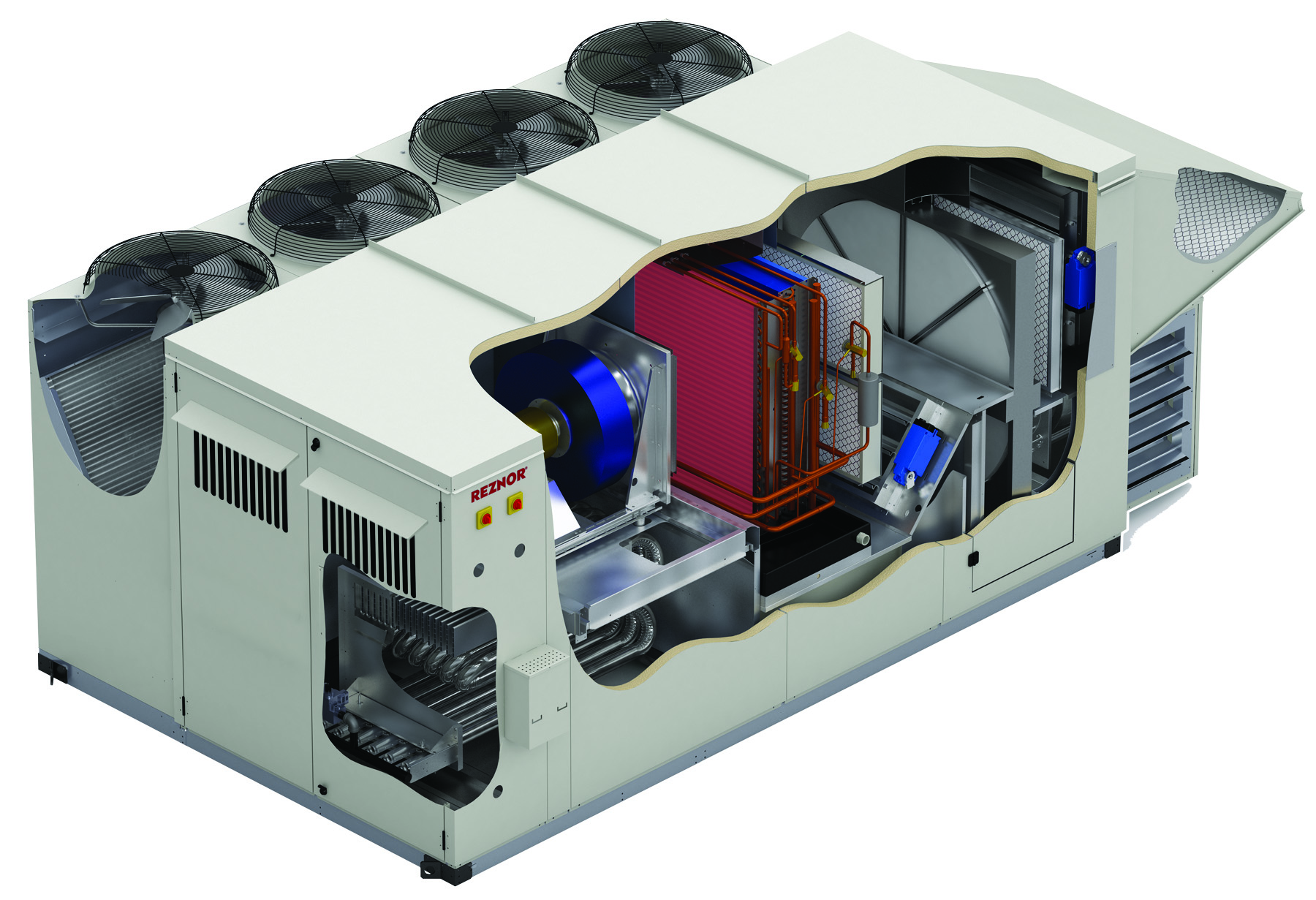 Nortek Global HVAC, the UK’s leading supplier of gas-fired warm air heating and ventilation systems, has launched its first packaged HVAC unit.
Reznor’s P125 is a packaged unit that provides heating, cooling and ventilation for commercial and industrial applications. The unit provides a complete standalone solution for clients requiring energy efficient cooling and heating systems with the ability to provide fresh air and extract air solutions, ensuring a very high standard of indoor air quality.
The P125 is so versatile that it can be used in a number of commercial and industrial applications including, restaurants, cinemas, events centres, arenas, showrooms, exhibition centres and shopping centres as well as distribution centres, warehouses and high-tech production facilities.
This innovative product from Reznor combines many energy saving features to provide class leading performance including modulating heating and cooling to provide accurate and proportional temperature control, variable speed fans to balance and control the airflow, along with heat recovery options with high efficiency thermal wheel and dehumidifying pumps.
Benefits
“For improved effectiveness and in order to maintain comfort conditions within a building along with air quality and humidity, an efficient HVAC system must be able to deal with all climatic variables. Reznor’s range of rooftop units comprising models YDSA, YDHA and YDMA have all been developed with these factors in mind” says Steve Walford, Product Manager. .
The P125 is difference to its adversaries in that it has the ability to provide solutions for between 0 – 100% fresh air. Models YDMA 70 – 100%, YDHA 30 – 70% and model YDSA 0 – 30% fresh air. The unit meets environmental concerns by offering free cooling 0 – 100% using fresh air to reduce energy consumption by the compressors and features a digital scroll compressor with 10% to 100% capacity control to reduce running costs and provide accurate temperature control. There is also a variable air volume (standard) plug fan technology on all models, which reduces fan power for demand control ventilation.
A high efficiency integrated energy recovery (thermal) wheel is available on all models along with 10 – 100% gas modulation for close temperature control and reduced heating costs. The product also features a reheat pump option for superior part load performance.
Added to their existing portfolio of industry leading products, the P125 reinforces Reznor’s position as leaders in the manufacture and development of energy saving products.
View Reznor's profile:

TYPE C WATERPROOFING – A NEW ON LINE RESOURCE
Story
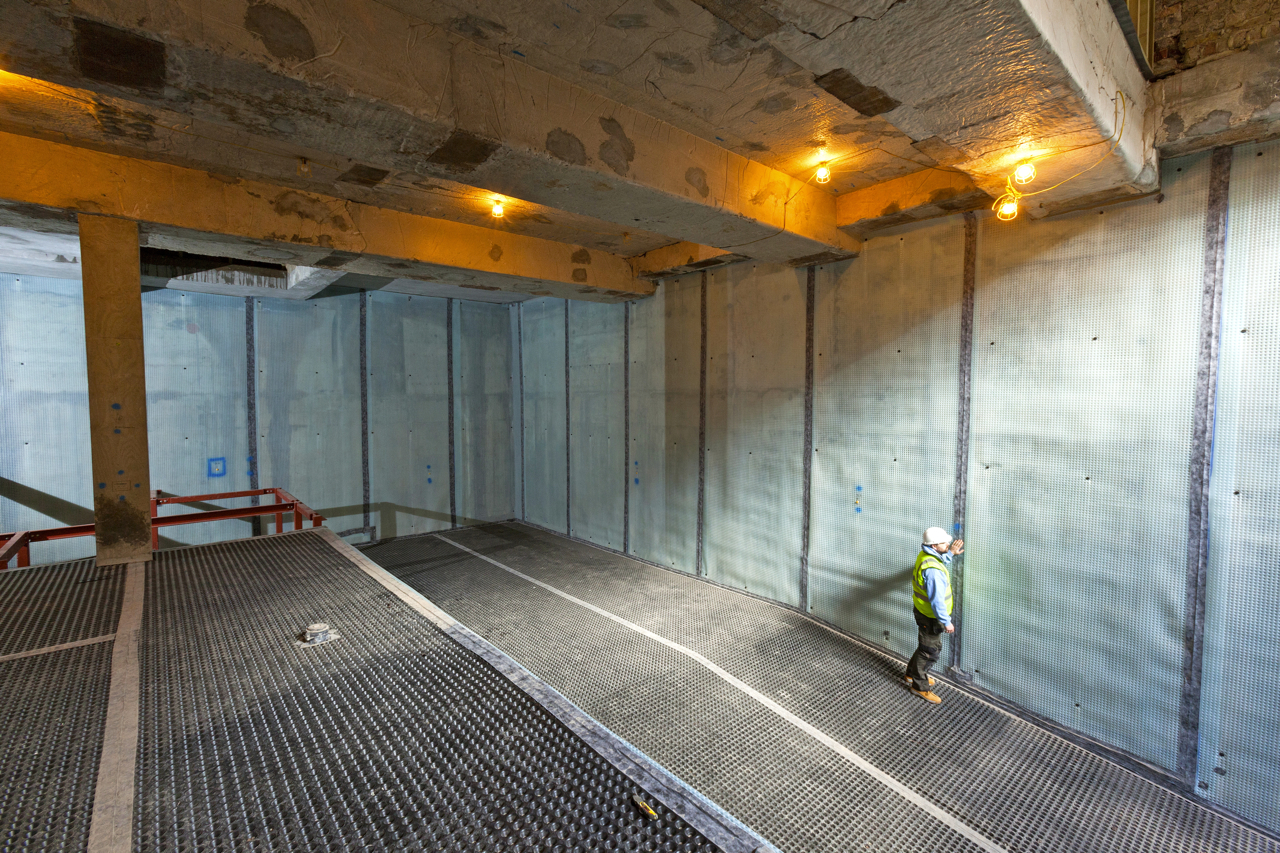 Triton’s new ‘Type C’ waterproofing website has been designed as a resource for specifiers of structural waterproofing systems. Triton supplies a complete range of systems for structural waterproofing but this new site focuses on the company’s BBA approved Platon cavity drained membrane systems – defined as ‘Type C waterproofing’ in BS 8102 2009.
Cavity drain membranes work on the principle of allowing water to continue to penetrate a structure but control it in the air gap and divert it to a suitable drainage point. Once the membrane has been fitted, wall surfaces can be dry lined or plastered directly. Floors can be screeded or a floating dry board system installed.
The membranes are suitable for use in new build, existing basement conversions or retrofit projects and are quick and easy to install. Minimal surface preparation is required making them ideal for heritage buildings and in conservation projects.
They are impermeable to water, gas and water vapour and also suitable for specification as ground gas barriers and to upgrade contaminated industrial floors.
typecwaterproofing.co.uk also refers to the ancillary products required to complete a Type C system including sumps, pumps and drainage components and anti-lime coatings to protect cavity drained systems from ‘free lime’ blockages.
There are case studies provided to demonstrate the use of Type C systems in a variety of new build and existing domestic, commercial, historic and public buildings.
Direct links from individual product sections on the site take you to technical data sheets, detail drawings, BIM objects and NBS clauses hosted on Triton’s main website. The enquiry form lands directly on the desk of technical staff who can help you with your project.
Triton offers RIBA approved CPD seminars for architects, training for installers and full technical support.
Visit http://www.typecwaterproofing.co.uk
View Triton Systems's profile:

Precision Technology Supplies announce move to new larger premises in East Grinstead.
Story
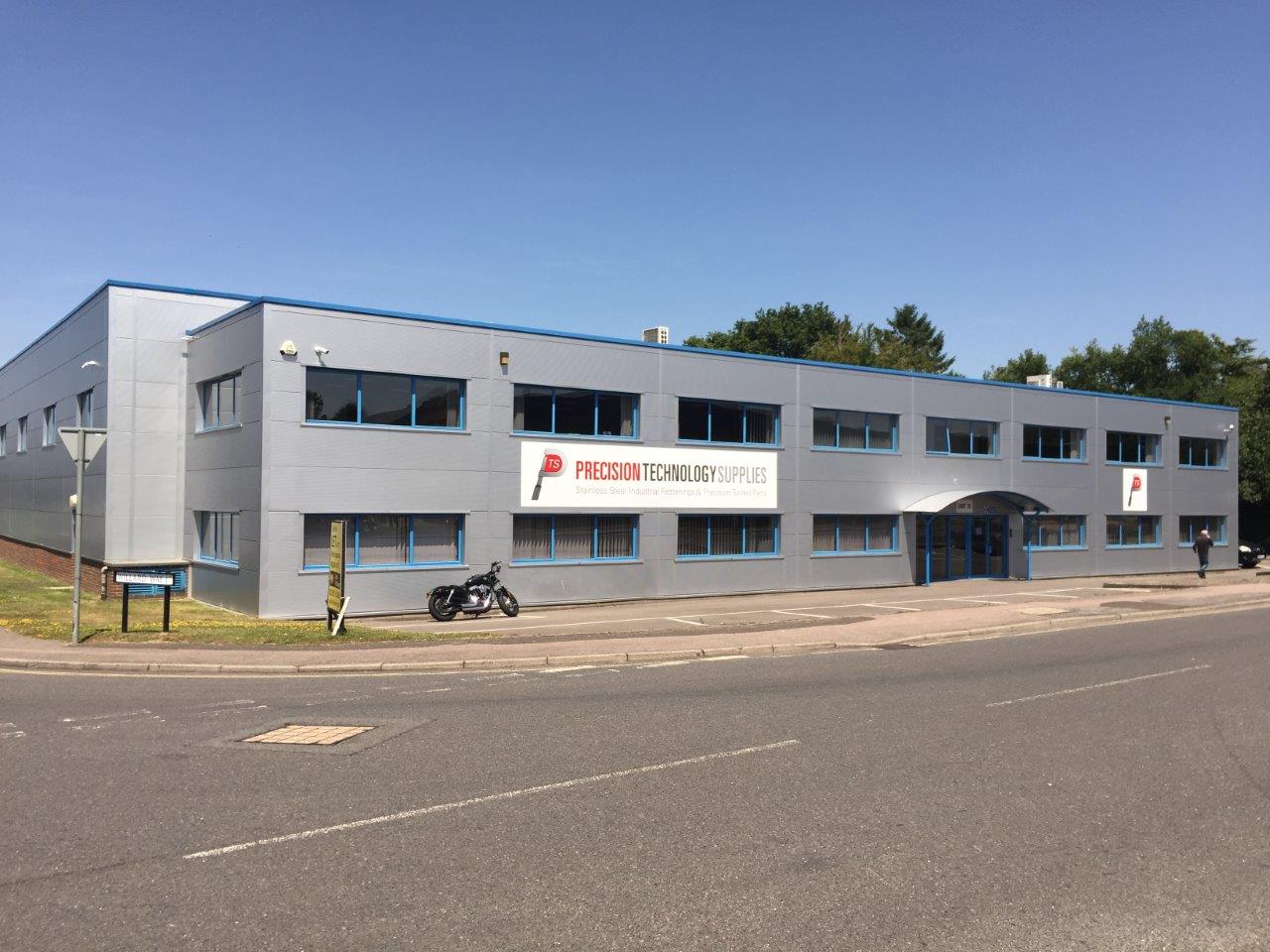 Precision Technology Supplies, the East Grinstead Based Stainless Steel fastener distributor, are pleased to announce we will be moving to a new larger warehouse in the next few weeks. Continued growth and the need for larger stock holding have meant we have outgrown our current facility despite recent extensions and modifications. The new 30,000 sq/ft warehouse will allow for continued growth for the foreseeable future. Extra storage will mean increase stock holding allowing us to provide more items from stock. The new facility is located on the same industrial estate as the current warehouse providing a seamless change from one place to another with no disruption to service levels.
View Precision Technology Supplies's profile:

HIGH EFFICIENCY SMALL CIRCULATORS – Is ErP Legislation working?
Story
 European legislation has its friends and its enemies as we have discovered, having survived the rigours of a recent General Election. Whatever the outcome of the promised referendum on EU membership here in the UK, we have to get on with abiding by European Directives for now. With many of the day to day products in use in the heating and plumbing sector being manufactured by European companies, it seems highly likely that with much of the legislation already in place and being acted upon, it would stay whatever the outcome. In the EU, or out, we clearly as a nation, need to reduce carbon emissions and continue to clean up our act on the environmental stage.
There is still a lack of realisation in some circles, of the amount of energy that is used day to day by pumps as a proportion of energy use in the average home. And every home pretty much, has one. Once understood, it’s easy to see why it was a prime area for attention when looking for ways of reducing energy use and reducing carbon emissions. In today’s vernacular, it was something of a ‘no brainer’.
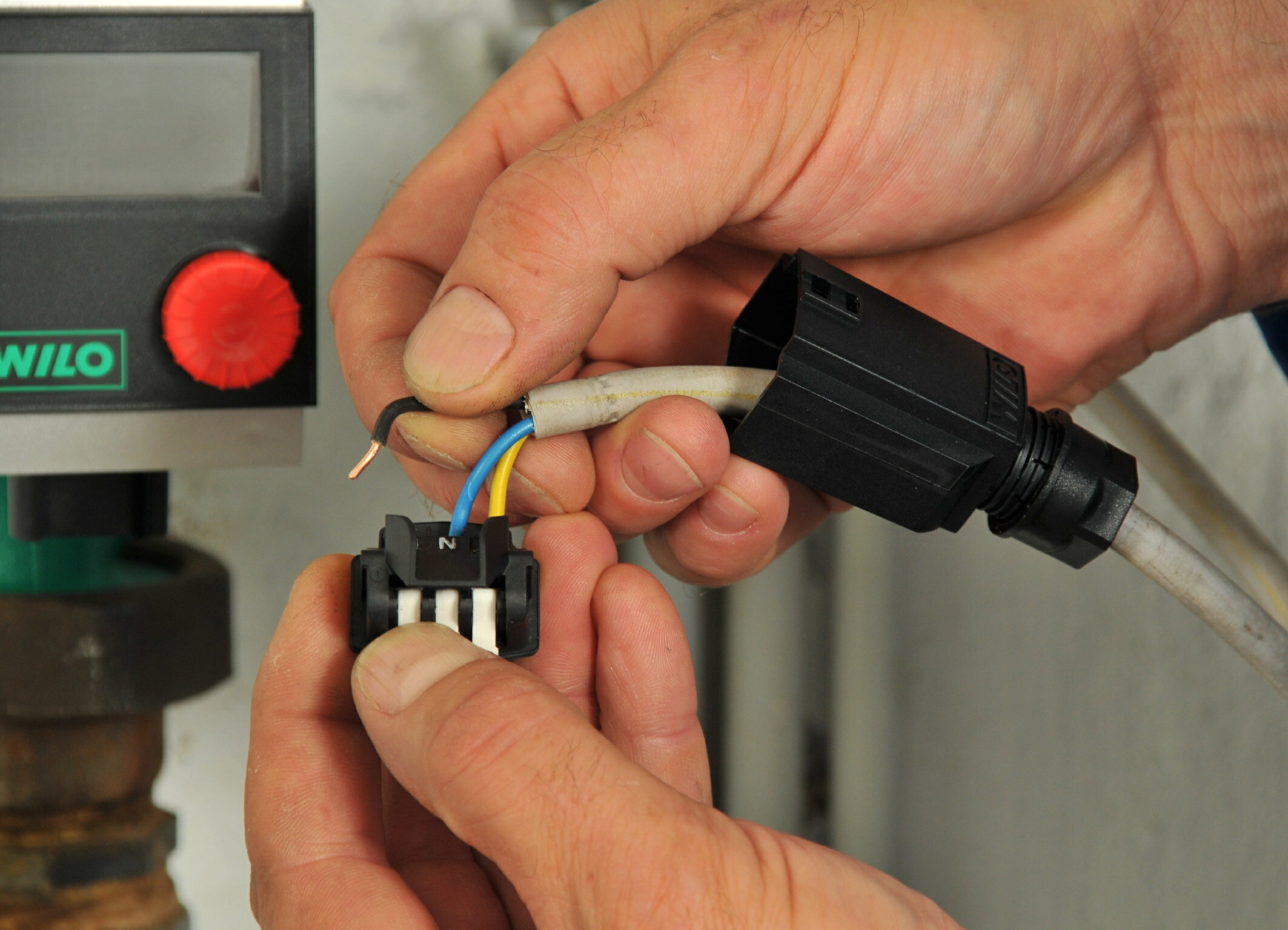 Small circulating pumps are a key component of all wet heating systems in the UK – whether traditional boiler driven systems or new renewable systems. They perform as standalone pumps or as integrated pumps in combi and system boilers and they keep the water circulating in underfloor heating systems too. They are responsible for a much higher percentage of overall household electricity usage than many still realise which is why old uncontrolled pumps were targeted by European legislation as a key way of reducing energy usage in the home, reducing energy bills and reducing emissions. They offered a real way of making strides towards meeting the ambitious environmental targets set by the UK Government and European legislators.
Before January 2013, small circulating pump selection was often made on price. Although some installers had loyalty to a brand, in many people’s eyes, a pump was a pump was a pump. If it did the job, it did the job. There were a few high efficiency pumps on the shelves before the end of 2012, but at a far higher price than the standard efficiency ones. Until legislation said that you had to install them, despite some installers deciding that a high efficiency pump was what the customer deserved as part of an energy efficient heating system, from sales figures alone, it was clear that many were voting with their wallets.
 From January 2013 high efficiency pumps were demanded by EU Legislation – the much vaunted ErP Legislation – and whilst there was initially some resistance to comply, as 2013 unfolded and availability of anything other than high efficiency options declined, installers began to buy and install and specifiers began to specify the high efficiency options. Now, just a few months down the line, high efficiency pumps have been accepted and are being installed in their thousands across the UK, with for example, some social housing landlords undertaking major pump replacement programmes, to help reduce their tenants’ electricity bills.
Despite this embracing of the new legislation and availability of the new ErP compliant circulating pumps, the fact remains that there are still many millions of old, uncontrolled small circulators operating in heating systems across the UK. So there is still huge potential to further reduce energy use and energy bills in the months and years ahead. Wilo and other pump manufacturers have begun to see their high efficiency models begin to sell well. Helped by the legislation, there was little choice but to utilise the new high efficiency models.
Although the concept of lifecycle costs was not new in January 2013 when ErP came into force, it was a concept that had largely been associated with commercial projects rather than domestic ones. But suddenly it became more important and the additional costs that inevitably follow the development of exciting new technology – in this case the vastly improved electronics and the arrival of electronically commutated motors (ECMs) for small circulating pumps – were justified by the lower life cycle costs of the new high efficiency, more expensive pumps and the huge savings possible over a ten or fifteen year operational life time. These could pay for the increased capital cost of the pump at the outset, many times over.
Wilo has just announced it is celebrating the sale of 28 million small circulators in the past ten years. In addition the company recently celebrated the selection of its small circulators as the pumps in the new combi boilers launched by two major boiler manufacturers here in the UK. Wilo’s high efficiency small pumps – in particular the Wilo-Yonos PICO – have made a huge impact in the UK heating and air conditioning sector over the past two and a half years, since the arrival of the ErP legislation in January of 2013.
Wilo’s series of glandless pumps – Wilo-Yonos PICO, Wilo-Stratos PICO and Wilo-Stratos – are seeing increasing popularity across the board. They are relevant for nearly all applications for heating, air-conditioning and cooling in the building services area – from the family home to a small commercial or industrial building.
Sadly, as always, some people will try to circumnavigate new legislation and ignore the drivers for environmentally friendly products. There has been genuine concern in the pump industry about the on-going availability of non-ErP compliant pumps, and the mislabelling of some pumps being imported into the UK and European markets since January 2013. European manufacturers are concerned that these pumps, although cosmetically looking like the new high efficiency models, in some cases, do not meet the requirements of the ErP regulations. Wilo, along with fellow members of the British Pump Manufacturers Association, continues to monitor this situation and report breaches of the regulations to the relevant authorities.
In general terms, the arrival of the EU ErP Directive has clearly begun to make significant inroads in the energy consumption figures, and as a result the emissions figures. There’s a long way still to go to hit the targets being demanded. But the age of the energy efficient pump is very much here.
To find out more about Wilo’s highly convenient, reliable family of high efficiency, ErP compliant small circulating pumps, just click on to www.wilo.co.uk.
View Wilo's profile:

Timbmet builds for the future
Story
 The Timbmet Group has had a second consecutive year of improving both their gross and net profitability and stabilising revenues. To build on the secure business platform now in place, Timbmet is planning for further growth.
Chairman, Simon Fineman, comments: “The Group is pleased to report an operating profit before exceptional costs of £2.126 million, compared with £1.782 million last year. Given the actions taken by the group in recent years and the future plans, both supported by an easing of economic pressures, the board are confident that the business will continue to grow and to trade profitably in the current financial year.”
The decisive action in the first half of 2013 to restructure the management team and certain operational elements of the business has been reflected in the results for the last two years.
UK Managing Director, Nigel Cox, reports: “The underlying trend for the UK business was an increase of 7.1%, with our overseas business showing a strong growth of 31.1%. Overall, group sales fell by 1.0%, but this includes the discontinuation of low margin direct business to a major DIY chain. As a result, the gross profit percentage increased by 1.7 percentage points.
“Our intention now is to invest further by enhancing our stock range and increasing the number of front line sales staff so that customers get the advice and support that they need. Operationally we’re investing in our business infrastructure, expanding our warehouse capabilities and upgrading our fleet to enable us to effectively process the orders and, ultimately, deliver the product.”
Chief Executive, Paul Rivers, notes: “It is very pleasing to see the efforts of the last two years reflected in the group’s return to stability and profitability. We are continuing to work on forward planning to continue increasing the rate of sales growth and profitability of the business. This will in turn allow for greater re-investment for the future.”
Paul continues, “We want to be a business that customers want to trade with, because our service is better, our products are right and because our staff understand what the customer needs.”
Timbmet has also continued to review their closed final salary pension scheme. This year an additional non-cash exceptional cost of £1.0 million was recognised to correctly equalise retirement ages under the scheme. The 2014 triennial valuation of the scheme has been completed, and a new and longer deficit reduction payment plan will apply from July 2015. This will reduce the group’s contributions to the scheme for the next three years.
View Timbmet's profile:

Aperam stainless steel shingles for Borders Visitor Centre
Story
 UGINOX® TOP from Aperam, has been installed as shingles by Longworth Metal Roofing, to provide a permanent, durable matt façade on the Galashiels Transport Interchange. As the tourism entry point to the Scottish Borders it was designed as a ‘statement building’ with the facade a key element of the design as it looks out onto the Borders Railway. The Interchange provides an improved connection between the inner relief road, railway and bus station as well as excellent visitor and passenger facilities.
In addition to being specified for its lasting appearance and sustainability, stainless steel was chosen in preference to aluminium as the installed cost was found to be considerably less. UGINOX TOP is a double-sided surface texture and has been designed for use in traditional or contemporary designs in either rural or urban environments.
Considered to be the most sustainable of the hard metals, stainless steel does not oxidise or weather in any way, causes no problems with run off, is easy to work and has very low maintenance requirements.
View Aperam's profile:

Klober airtightness accessories at the Building Centre
Story
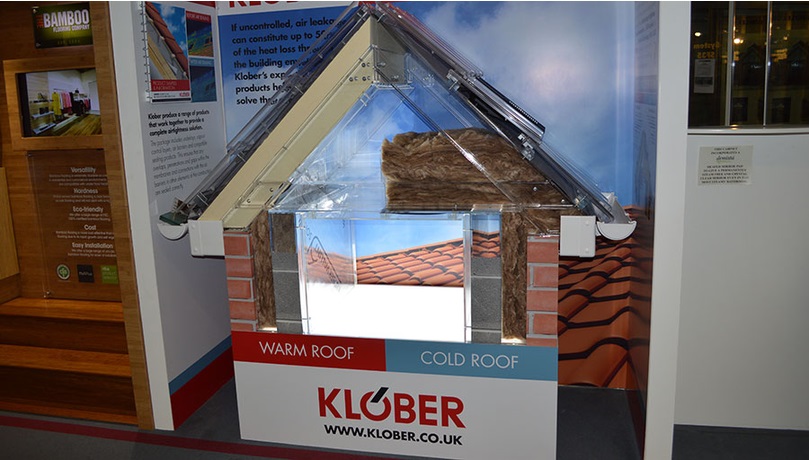 For those designing energy-efficient buildings, roofing specialist Klober now has a permanent exhibit at the Building Centre. Klober has pioneered the development of tapes, sealants, sealing collars and vapour control layers to seal the roof space, ceilings and tile penetrations. The company also manufactures high performance air-open and vapour permeable underlays for all roof types and pitch in order to provide balanced ventilation and airtightness. As with all exhibits at the Building Centre, brochures are available on site or via Specifinder – http://tinyurl.com/p4mjgmz. A roofing airtightness CPD presentation can also be booked by calling Ann Leeson on 01332 813060.
View Klober's profile:

Blackpool Pleasure from Bradite
Story
One of the most famous amusement parks in the UK is being kept in  tip top condition thanks to products from the Bradite paint and primer range. Blackpool Pleasure Beach amusement park is located along the Fylde coast in Blackpool, Lancashire, and with millions of visitors a year, it is essential that the most visited tourist attraction in the United Kingdom is maintained on a rolling basis.
Keeping the rides in pristine condition considering the elements of the environment is no mean feat: sea and salt spray from the adjacent coast are a highly corrosive combination but First Leisure Group, who manage the park, has found a perfect solution in the Bradite range of products, which has been the paint of choice for the park for many years.
As part of the park’s rolling maintenance programme, the rides are being spot primed with Bradite EP92 and then coated with two coats of PG77 polyurethane gloss finish. As well as protection, the products also had to supply the required aesthetic finish: for structures the size of the rides at the amusement park, it was vital that an overall glossy, long lasting colourful finish was attainable that would catch the eye and entice visitors.
Each ride had its own colour theme, but the Bradite PG772 gloss finish is available in a broad range of RAL colours to satisfy the requirements of the theme park. Both the primer and the gloss finish were specified for their ease of use and longevity. The Bradite EP92 two pack polyamide adduct cured primer is designed for steel substrates, containing a high level of zinc phosphate anticorrosive pigment. It provides a tough hard wearing film, which is flexible and abrasion resistant. The primer was followed by application of the PG772 two pack polyurethane highbuild acrylic high gloss finish with excellent colour retention and weathering resistance. Surface dry in one hour, this is the perfect choice for the team of decorators at the Blackpool pleasure beach amusement park.
Painting the rides was not straightforward. The height and size of some of the rides meant that the decorating team has to abseil down the structures on ropes to complete the task, including the tallest ride in the UK, Pepsi Max Big One which towers 235 ft above sea level. Having a painting product range such as Bradite was an enormous benefit due to its ease of speed of application.
View Bradite's profile:

WARMING TO STELRAD IN ARK PUTNEY ACADEMY
Story
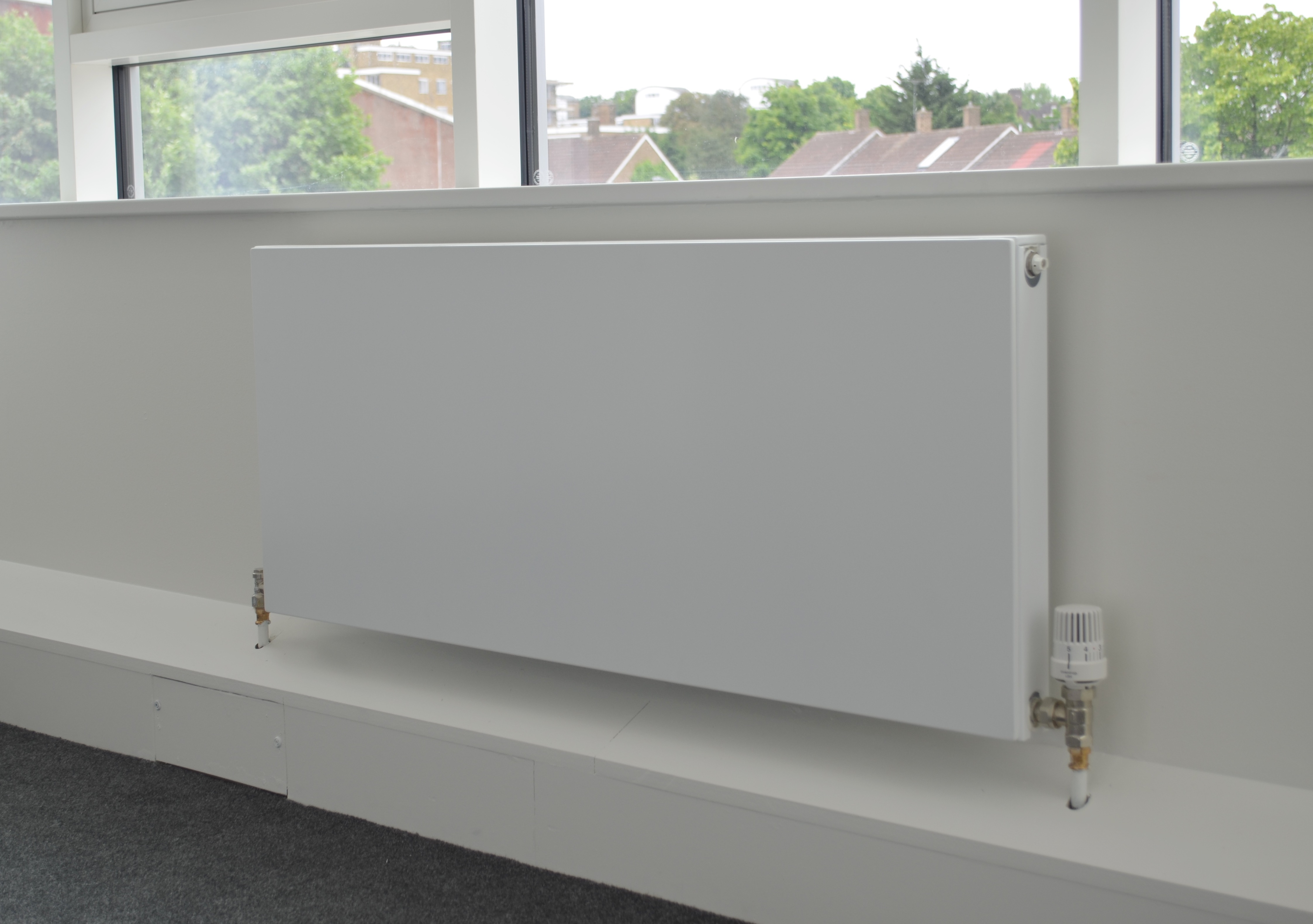 Whilst Stelrad radiators are often associated with residential installations, increasingly they are being specified for commercial and public buildings where the quality of their manufacture and consequent longevity as part of an energy efficient heating system make huge sense. One major area where Stelrad radiators are making their mark is in educational buildings – schools, colleges and universities across the UK, where they work equally well with traditional boiler driven heating systems or modern renewable systems, ground source and air source heat pumps in particular.
Putney Academy in south west London, is one of 31 academies owned and managed by ARK in the UK. The organisation took over the former Elliott School in 2012 and has set about improving the quality of the buildings and their surroundings in a big way, such that the main buildings have been totally refurbished with high quality, modern school facilities that will hugely benefit the pupils attending the academy. The work will be completed by the time staff and pupils return to school after the summer holidays.
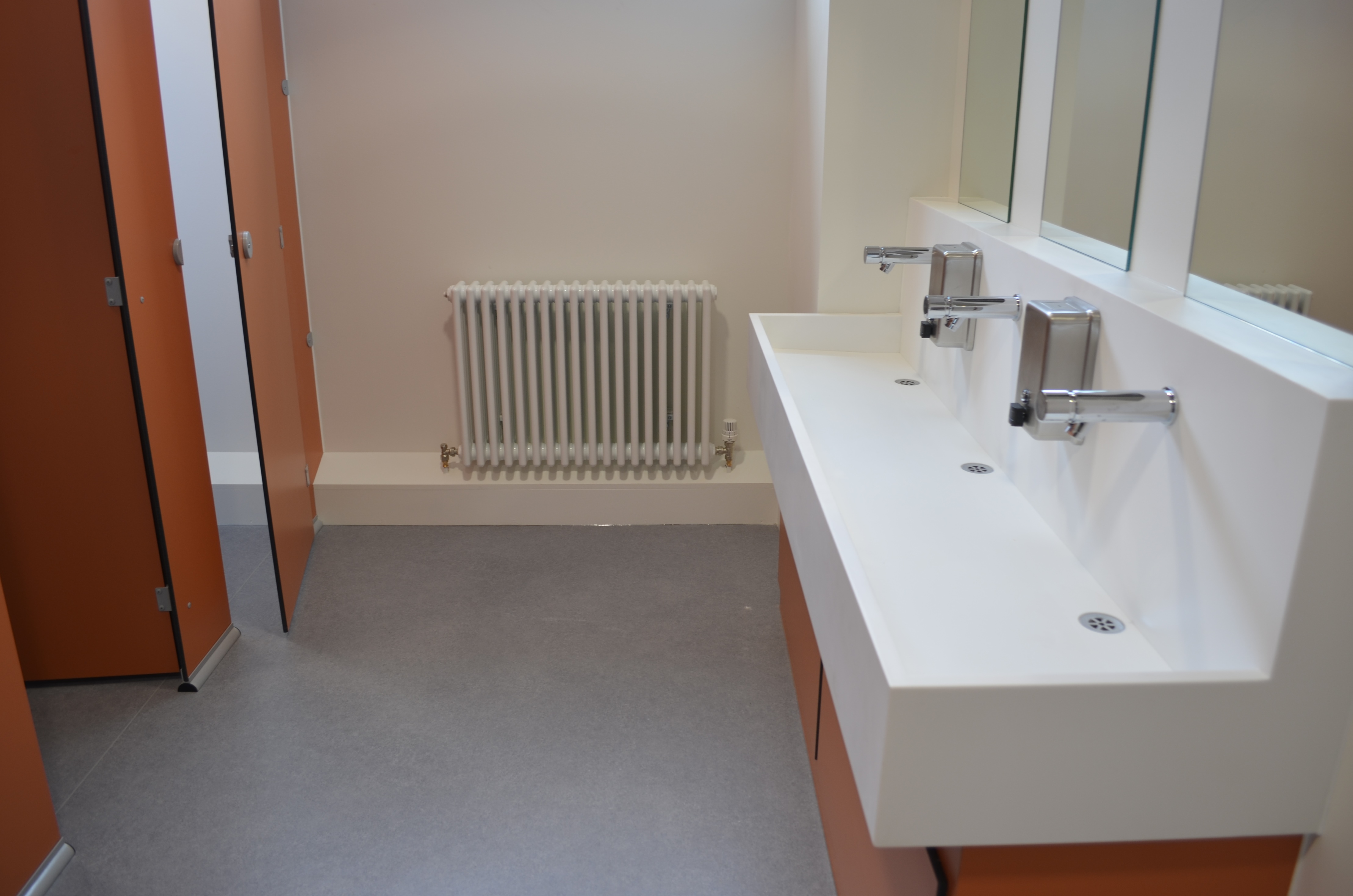
Part of the major refurbishment work at the academy has inevitably seen the provision of a brand new heating system to provide comfort and warmth in the colder months of the year. Both the UK’s leading low surface temperature range – perfect for a building with young people, offering safe heat from radiators where the surface temperature of the attractive casing never exceeds 43 degrees C – and a smaller number of Stelrad Planar designer, flat fronted radiators along with a selection of traditional Classic Column radiators were specified for the project.
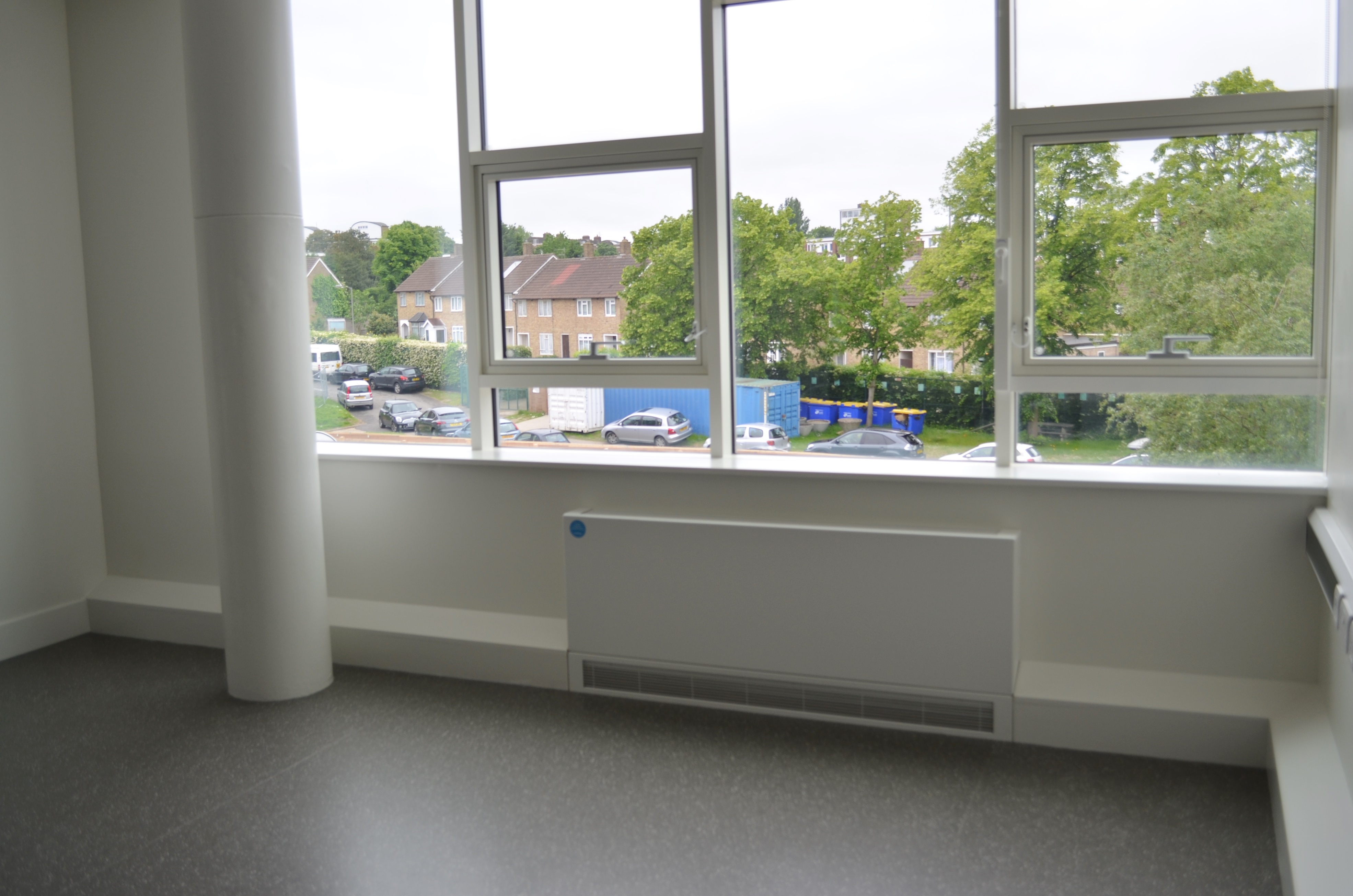 Skelly & Couch are the building environment and services engineers for the project. Director Mark Maidment says: “We wanted quality radiators to complement the other components of the heating system but in particular wanted to use LST radiators in areas of the academy where youngsters congregate to ensure maximum safety. Stelrad’s leading range of LST radiators are easy to install and offer the maximum protection to the end user – the casings actually cover the pipework as well as the radiator itself so there are no ‘hot’ areas that could cause any problems. In addition, it’s vital the radiators used in a school environment are built to be robust and able to withstand and resist vandalism and day to day wear and tear. With those manufactured by Stelrad, the casing is held by security fittings that are quick and easy to install. The security fittings have a unique seam fixing bracket system that prevents unauthorised access to the emitter inside the casing.”
“We were delighted that our radiators were specified for this project,” says Stelrad’s Chris Harvey. “We’re seeing a huge increase in the use of our radiators in commercial and public buildings. The use of LST radiators in schools makes huge sense from the point of view that they provide safe heat whatever environment they are installed in and they are protected from tampering by the way they are fixed to the wall, ensuring that the heating systems on-going performance is not compromised.”
Full details of the wide range of radiators available from Stelrad can be found at www.stelrad.com.
Click on images to enlarge:

View Stelrad's profile:
Platon sealed system supplied for iconic fire brigade building conversion
Story
 Triton has supplied 3,000 m2 of BBA certified Platon P8 cavity drain membrane to waterproof several basements at the iconic West Midlands Fire Brigade building at Lancaster Circus in Birmingham. The membrane forms part of a Type C drained waterproofing system (as defined in BS 8102 2009) to the area, which is being converted to residential accommodation for 463 students from Aston University.
The system is being installed by Triton approved contractors, Protectahome, working for Watkin Jones Construction. Cavity drain membranes work by allowing any water ingress to continue to enter the building through the walls, but then controlling it and diverting it down the wall to a perimeter drainage conduit. In this project, the conduit diverts the water to one of 10 sumps, each housing a Triton Aqua Pump Pro Plus kit (each comprising mains powered and battery back up pumps).
Moisture had been penetrating into parts of the basement for several years through the wall/floor joint and various cracks in the original floor slab. 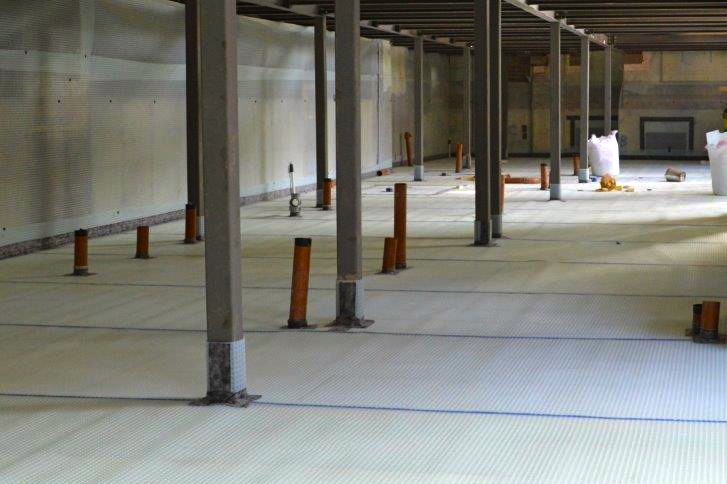 Although large floor areas have been excavated to allow for greater head height and replaced with new floor slabs, many of the original floors have been left in situ. As the Platon system allows moisture to enter the structure there is no hydrostatic pressure on existing floor slabs and no need to replace them.
Triton’s technical team has worked closely with the architect, main contractor and specialist basement contractor from design inception through to overseeing installation and testing of the system.