Category Archives: Manufacturing
10-Point Guide to Specifying Humidifiers
Story
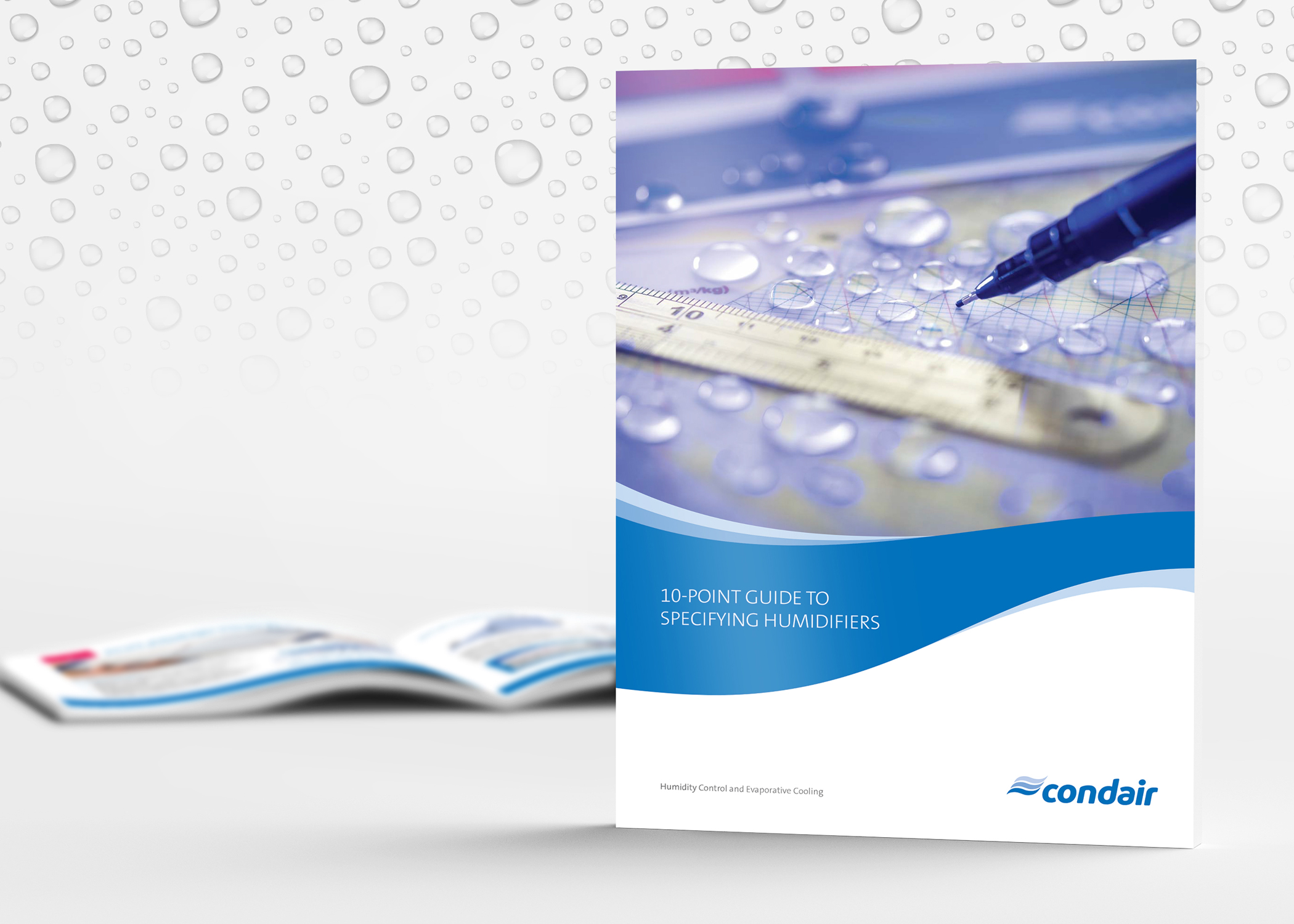
Humidity control specialist, Condair, has released an easy-to-follow 10-point guide to specifying humidifiers, aimed at HVAC consultants. The document presents an overview of the most important elements in designing a humidification project. It covers topics such as AHU vs in-room strategy, psychrometrics, product sizing, technology selection, installation and hygiene management.
Dave Marshall-George, Sales Director at Condair, commented, “We are delighted to publish this accessible guide to humidification for specifiers and consultants. It comprehensively walks a designer through, from the initial psychrometric calculations, to considerations around commissioning and maintenance. It includes some very useful rules of thumb and will prompt a consultant to review important aspects of a project they may not have otherwise considered.”
The free document can be downloaded from Condair’s website at www.condair.co.uk/guide
Dave continues, “The illustrated guide covers humidification of both air handling units and direct room humidity control, comparing all types of humidifier technology. The comprehensive advice it presents is unbiased and has been developed from experience across thousands of projects by Condair’s expert sales and service teams.”
The Condair Group is the world’s leading specialist in humidification and evaporative cooling, with energy efficient, hygienic and innovative technologies for commercial, industrial and heritage applications. Condair is represented in the UK by Condair plc, which offers system design, manufacture, supply, installation, commissioning, maintenance and spares. You can find out more by visiting the company’s website at www.condair.co.uk.
View Condair's profile:
Saniflo outdoor pump range extended
Story

Sanifos is a range of underground pumps from leading macerator supplier, Saniflo. Three original pumps with capacities between 110 and 500 litres were originally introduced to take the waste away from buildings with no gravity drainage by a pump that could be sited underground. Now, this range has been refreshed with two model upgrades and extended with a number of new models.
The Sanifos 280 replaces the original 250 and offers an additional 30 litres capacity, whilst the new Sanifos 610 provides a huge 110 litres additional capacity over its 500 litre predecessor. Both models have two macerating options – a grinder or a vortex impeller and can pump up to 14m and 16m respectively. All models feature a wired alarm for early warning of any problems, whilst the Sanifos 610 offers a choice of single or twin pumps, three phase or single phase, stop and check valve and a SMART unit as standard on models with two pumps.
For public buildings or for multiple smaller buildings, Saniflo has introduced four large capacity models starting with the Sanifos 1300 which can pump waste up an impressive 17m. This unit features two pumps mounted on a cast iron mounting base with stainless steel guide bars. A choice of inlet height position is available and a template is provided for this purpose. Three further models – the 1600, 2100 and 3100 – enable customised lifting station solutions according to the project in hand. This includes single or three phase, alarms and control boxes, covers, float and pump options, as well as multiple connections required.
Whether it is for a full house, an extension, a series of glamping pods or the installation of a washroom, the Sanifos pumps provide a solution when traditional drainage is not available or civils works are too costly and troublesome.
View Saniflo's profile:
Want to know how to save time and costs when installing above ground drainage using innovative Ensign cast iron preassembled stacks?
Story
Small improvements in productivity add up to large savings for the contractor. PAM have launched a new pre-assembly service for the Ensign cast iron above ground drainage system. Watch our video here to see how our pre-assembled Ensign cast iron stacks can make not only productivity savings (saves 60% time on site), reduce site movements but also minimise the impact on the environment and easily maintain social distancing on your construction site. What’s more, the beauty of them is they are preassembled at our Telford factory and delivered ready to install safely and quickly on site.
View PAM Building's profile:

Kinedo launches two new shower tray ranges
Story
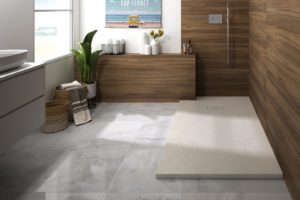
Shower brand Kinedo from Saniflo kicks off Spring with the launch of two new shower tray ranges and a new shower tray brochure, all available to retailers now.
The spa-like, textured Kinerock Evo shower tray is made from Biolex, which is a robust and damage-resistant mineral composite containing 80% mineral with an acrylic resin and gel coat surface. Available square, rectangle and quadrant and in five colours – white, black, grey, anthracite and sable –the Kinerock Evo is 30mm thick and comes with an extra-flat waste and a metal waste cover to match the chosen tray colour. Sizes range from 700x700mm up to 2000x1000mm.
Equally impressive is the new designer tray Kineline, which features a linear tray and a granite look and feel. Also made from Biolex and available in the same five colours as Kinerock Evo, the Kineline is 26mm thick and available square and rectangle with side and linear waste. Sizes from 800x800mm up to 1800×900.
Both models can be cut to size on site if required.
Saniflo Head of Marketing and Product Management, Ann Boardman, says: “The two new Kinedo shower tray ranges offer a quality, versatile, designer product at an attractive price point. The Kinedo Kinerock Evo and Kineline bring a touch of elegance to any bathroom or wet room. They’re low maintenance and safe, delivering a consistently superior showering experience.”
View Kinedo's profile:
VENTILATE PURIFY AND SANITISE – ADVICE FROM VORTICE AS LOCKDOWNS ARE LIFTED
Story
As the UK population slowly regains the freedoms it yearns for, advice from ventilation systems supplier VORTICE is to ventilate, purify and sanitise to maintain good indoor air quality at home and at work and avoid the transmission of germs and viruses in indoor spaces.
Marketing Manager Jennifer Quinn reveals the company’s thinking in the first of a series of podcasts from VORTICE in conjunction with BusinessNet Explorer. Over the next few months, Jennifer will cover topics such as continuous mechanical ventilation, heat recovery systems, sanitisation using UV-C ultraviolet light and hygiene products such as hand dryers and soap dispensers.
Jennifer Quinn said: “We’re delighted to work with BusinessNet Explorer for its Brand Leader Podcast series. The importance of ventilation has risen to the fore since the pandemic struck and I’m pleased to be able to explain how good ventilation systems can bring health benefits to building occupants.”
For more information about VORTICE and its products visit www.vortice.ltd.uk
View Vortice's profile:
Revolutionising the waterproofing sector with the launch of MS 500 Fire Retardant
Story


UK leading Manufacturer of Type C Cavity Drainage Systems, Delta Membrane Systems are revolutionising the waterproofing sector with the launch of their MS 500 Fire Retardant system.
With Delta MS 500 Fire Retardant membrane it is now possible to specify a Type C, Cavity Drainage Membrane that offers not only protection from water or vapour ingress but also protection in the event of fire.
The Delta Fire Retardant range has been manufactured with DELTASAFE, a new innovative fire-retardant property which achieves a Euroclass rating of B-S2, d0 in accordance with EN 13501-1:2018 meaning it is now possible to specify a Type C Cavity Drainage Membrane that meets building requirements of today, but also that of tomorrow, without having to radically alter specifications.

Delta MS 500 Fire offers the same design flexibility as MS 500, whilst maintaining its strength, durability, functionality and workability.
A Type C Cavity Drainage System is a maintainable basement waterproofing solution suitable for new-build basements, refurbishment and retrofit projects. The Type C System comprises of a Cavity Drain Membrane, Drainage system, Submersible Package Pump and Control System. This type of system is designed to combat water ingress and can be used to habitable in grades 1-3 according to BS 8102:2009.
As with all Delta products, no one knows protection like we know protection. We’ve learnt how to protect buildings from the most extreme conditions imaginable all over the world. Quality is consistent because of our unparalleled manufacturing and quality control processes.
Whether it’s structural waterproofing residential basements, to fire retardant Type C systems on a multi-level new-build, our Technical Team will be happy to provide a full specification and offer guidance throughout a project.
View Delta Membranes's profile:
Crittall marks World Art Deco Day
Story

As architects, designers and lovers of beautiful buildings prepare to celebrate the very first World Art Deco Day Crittall Windows is pleased to mark its contribution to some of the UK’s most iconic examples of this eclectic style.
Russell Ager, Managing Director of Crittall Windows, says: “ Our windows have helped to define some of this country’s best loved heritage buildings and are synonymous with the Art Deco period of the 1920s and 30s.”
Not only do the company’s slender steel frames feature in many of the surviving original structures but Crittall has also been called upon to supply like-for-like replacements where restoration projects seek to retain the appearance while upgrading to meet modern day thermal and acoustic performance requirements
Art Deco landmarks such as the Hoover Building and Battersea Power Station were designed with Crittall windows. In other projects such as Gateshead’s Baltic Flour Mill, steel framed fenestration was added when the building was saved and sensitively re-designed as a major arts centre.
Battersea Power Station was built with steel windows punctuating the brick clad elevations of the boiler houses, turbine halls and control rooms. The redeveloped site features Crittall windows in the first new-build bar and restaurant in the locality where MW40 windows and doors were specified precisely to reflect the area’s industrial heritage.
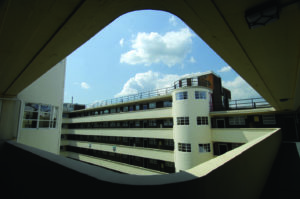
New Crittall windows were added to the north and south elevations of the transformed Baltic Flour Mill that sits alongside the River Tyne at Gateshead. Blending with the traditional architecture the full height fenestration now floods with daylight what was previously an enclosed space.
Less well-known Art Deco gems include Pegasus House, Bristol. Built in 1936 to house the employees of the Bristol Aeroplane Company, it boasted 430 Crittall windows, all of which were replaced with their modern equivalent – the Corporate W20 system – when the building was saved from its dilapidated state in a restoration several years ago.
And two housing estates, one in Wilmslow, Cheshire, the other in Richmond, south London, provide examples of Streamline Moderne, an offshoot of the Art Deco movement. The Grade II listed Appleby Lodge in Wilmslow, designed in 1936, features characteristic cantilevered balconies and curved cornices. During a recent refurbishment the original single glazed Crittall windows were upgraded with a mix of Homelight Plus and Corporate W20 systems.
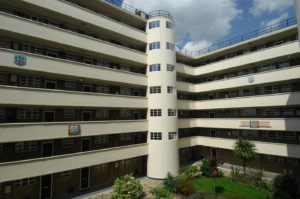
By contrast, Litchfield Court in Richmond features layers of long horizontal white painted balconies that give the buildings the appearance of an ocean liner, also characteristic of the Streamline Moderne style. Crittall replaced all its original windows throughout the estate, including a few inappropriate installations that had been added in intervening years, returning the blocks to their pristine, original appearance.
View Crittall's profile:

WEBINAR: UNDERSTANDING HUMIDITY’S IMPACT ON HEALTH
Story
Condair is hosting a webinar by Dr Stephanie Taylor entitled “Understanding Humidity’s Impact on Health”. The online presentation will take place at 2pm on 29th April. Dr Taylor is an ASHRAE Distinguished Lecturer and qualified as both a medical doctor and architect, so is ideally placed to advise on health matters concerning the built environment.
During the 45 minute webinar, Dr Taylor will be reviewing the latest scientific studies to explain how indoor humidity affects the airborne transmission of viruses and how it impacts the defence mechanisms in our nose and throat. The presentation will be of interest to anyone in the building services sector, as well as those responsible for the safe operation or management of an occupied building.
Dr Taylor is a is a Harvard Medical School infection control consultant, a member of the ASHRAE Epidemic Task Force established to provide guidance on how to ensure buildings are prepared for future pandemics, a medical advisor to The British Standards Institution, Chartered Member of the Royal Society of Public Health and a Chartered Member of the Chartered Association of Building Engineers.
Dave Marshall-George, UK Sales Manager for Condair, who will be introducing the session, comments, “We are really delighted to be hosting this webinar and to have such a prestigious speaker as Dr Taylor. Humidity’s role in mitigating the risk of airborne infection is greatly under-appreciated, even though there is a wealth of science on the subject. This webinar is an invaluable chance for HVAC consultants, contractors and facility managers to review for themselves the role indoor humidity plays in the safe operation of buildings.”
To learn more and register for the session visit www.condair.co.uk/webinars.
The Condair Group is the world’s leading specialist in humidity control and evaporative cooling, serving commercial, industrial and heritage sectors. Condair is represented in the UK by Condair plc, which offers system design, manufacture, supply, installation, commissioning, maintenance and spares. You can find out more by visiting the company’s website at www.condair.co.uk.
View Condair's profile:
Saniflo launches grease traps
Story
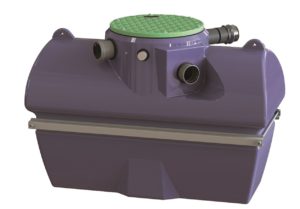 Saniflo has launched three new grease traps – SanigreaseT24, SanigreaseT and SanigreaseS – for the hospitality sector, hospitals and other professional kitchens to help minimise the issue of fatbergs in the nation’s sewers caused by fats, oils and grease (FOG) waste.
SanigreaseT24 is designed for mobile use. This small, lightweight (4kg) unit can be installed under one sink and is ideal for food trucks.
SanigreaseT sits on raised feet and is designed for cafes and restaurants serving up to 100 meals per service and which have 1 to 4 sinks. SanigreaseT features drain valves for quick and easy maintenance.
SanigreaseS is very easy to install, can fit through an internal door (773mm wide), is available with ventilation and drainage pipe and features an optional alarm. SanigreaseS is ideal for large, professional kitchens in hotels, hospitals, canteens and other mass catering venues that require larger grease traps with a sludge trap for recovering heavy materials.
Grease traps separate out FOG from water poured down the sink; catching it and collecting in in a separate tank whilst allowing the wastewater to discharge freely. Ideally a food filter will be plumbed between the sink and grease trap to stop any bits of food waste that haven’t been caught by a sink strainer – filtering them out before they reach the grease trap.
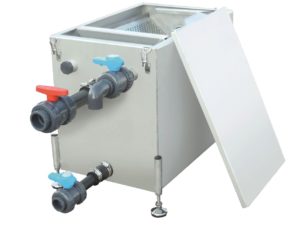
It is estimated that the UK spends some £200m a year cleaning out over half a million tons of FOG from sewers, yet apparently just 30% of the UK’s 400,000 commercial kitchens are served by some sort of FOG mitigation system. It’s perhaps not surprising that water companies are looking to advise and guide the hospitality sector on solutions that minimise the build-up food by-products. And it’s not just for the benefit of the water companies either – blocked pipes can cause bad smells, poor water run-off and flooding – unhygienic for a catering business, the local community and ultimately bad for the environment.
One issue is the lack of infrastructure in eating establishments whilst another is Britain’s Victorian sewer network, which simply isn’t fit to cope with drains clogged up with solidified liquids from the sector which often includes waste such as wet wipes. The two often go hand in hand. Wet wipes are used to clean up fat and grease and then flushed away rather than binned.
As a result, water companies are called out to clear tens of thousands of blockages each year often causing venues to temporarily close; losing revenue while the cause is investigated and appropriate action taken. Failure to dispose of FOG correctly can also ultimately lead to prosecution if any environmental laws have been breached.
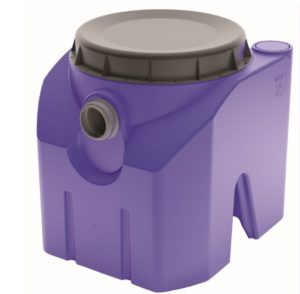 The most obvious and effective way of reducing FOG-related problems is to prevent their discharge in the first place by installing a grease trap. Plumbers and installers have an opportunity to educate commercial catering customers on the benefits, as well as the regulations, whilst offering the solution. Given that many catering venues rely on lifting stations to discharge hot, soapy waste water it’s a relatively simple exercise to install or retro-fit a grease trap as an intermediary between the pump and the drain.
A common question is whether grease traps work effectively with dishwashers. They can, but the siting of the unit is then the key question. Hot temperatures generated by dishwashers can break down the waste water and the trap may fail to catch the FOG at the point of discharge; causing a blockage further down the pipe. However, placing the grease trap at a distance from the dishwasher will enable the water to cool sufficiently enabling the trap to capture FOG as the water solidifies. It is essential to look at the spec of each unit to work out the installation distances.
So, whilst grease traps are a legal requirement for businesses dealing with hot food, it is clear that many do not comply. This might be a lack of awareness of the law, the option and the installation process. Herein lies the opportunity for plumbers and installers.
View Saniflo's profile:
CONDAIR LAUNCH NEW EVAPORATIVE HUMIDIFIER
Story
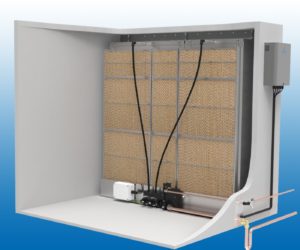
Humidity control specialist, Condair, is launching the Condair MC, a new in-duct evaporative humidifier and cooler. A single unit is capable of supplying up to 360kg/h of humidity and around 245kW of adiabatic cooling to an air handling unit (AHU) from less than 0.15kW of electrical energy.
The Condair MC consists of an evaporative module and hydraulic unit, which sits inside the AHU, and a control panel located outside. The evaporative module is a wall of corrugated glass fibre media cassettes, with stainless steel frames, through which the air flows. The hydraulic unit pumps water to the top of the evaporative module to wet the glass fibre media and humidify the air flowing through them.
Dave Marshall-George, UK & IRE Sales Manager at Condair, commented, “We are delighted to be adding the Condair MC to our evaporative humidifier range. With every kilogram of humidity provided by an evaporative humidifier around 0.68kW of adiabatic cooling is also achieved. This sustainable cooling technology presents great potential to reduce the carbon footprint of our built environment. We are seeing more and more air handling unit manufacturers and M&E consultants incorporating direct and indirect evaporative cooling strategies into their AHU designs. The new Condair MC incorporates many innovative hygiene, installation and operational features, making it an ideal solution for evaporative cooling or adiabatic humidification.”
Evaporative humidifiers can provide humidification during the winter to raise an indoor humidity level, as well as offer adiabatic cooling during the summer to economically cool an internal environment. The main advantage over other in-duct spray humidifiers is that evaporative units can operate on mains water, without the need for a filtered RO water supply. This greatly improves the water efficiency of the system. The benefit over in-duct electrical steam humidifiers is a reduction in energy cost. The energy required to evaporate the water can be taken from the airstream, if excess heat is available, or from cheaper gas-fired pre-heating.
The Condair MC incorporates robust glass-fibre evaporative media, which has a long operational lifetime and is impregnated with antimicrobial additives for hygienic operation. The evaporative media has been independently tested and found to be non-particle releasing, and Euro Class A2-S2-D0 (UL 900) flammability rated.
As with any adiabatic humidifier, hygiene control is paramount and the Condair MC has automated flush and drain cycles, to ensure the water in the system is fresh and hygienic. Any sustained period of non-operation will initiate a drain of the system to ensure water cannot stagnate. An optional submerged UV sterilisation system is available to kill micro-organisms in the water and further enhance hygienic operation.
The hydraulic module can incorporate up to three low energy, long-life pumps, with frictionless magnetic impellors that are almost silent in operation. The pumps provide water to the evaporative module in stages, allowing more accurate control over humidification than single stage systems. As the humidifier has multiple pumps, its energy consumption is proportionate to output. Electrical consumption ranges from just 74W, with only one pump operating, to 145W with three.
The Condair MC’s control panel provides PCB controlled operation of the humidifier, BMS connectivity via Modbus, as well as LED indication of operational status and fault diagnostics.
The Condair Group is the world’s leading specialist in humidity control and evaporative cooling technologies. Condair offers free expert advice and system design, as well as manufacture, supply, installation, commissioning, maintenance and spares. The company operates globally with manufacturing facilities in Asia, Europe and North America, has Condair sales offices in 22 countries and international sales partners in more than 50 other regions.