Category Archives: Manufacturing
VMZINC launches engraved facade
Story
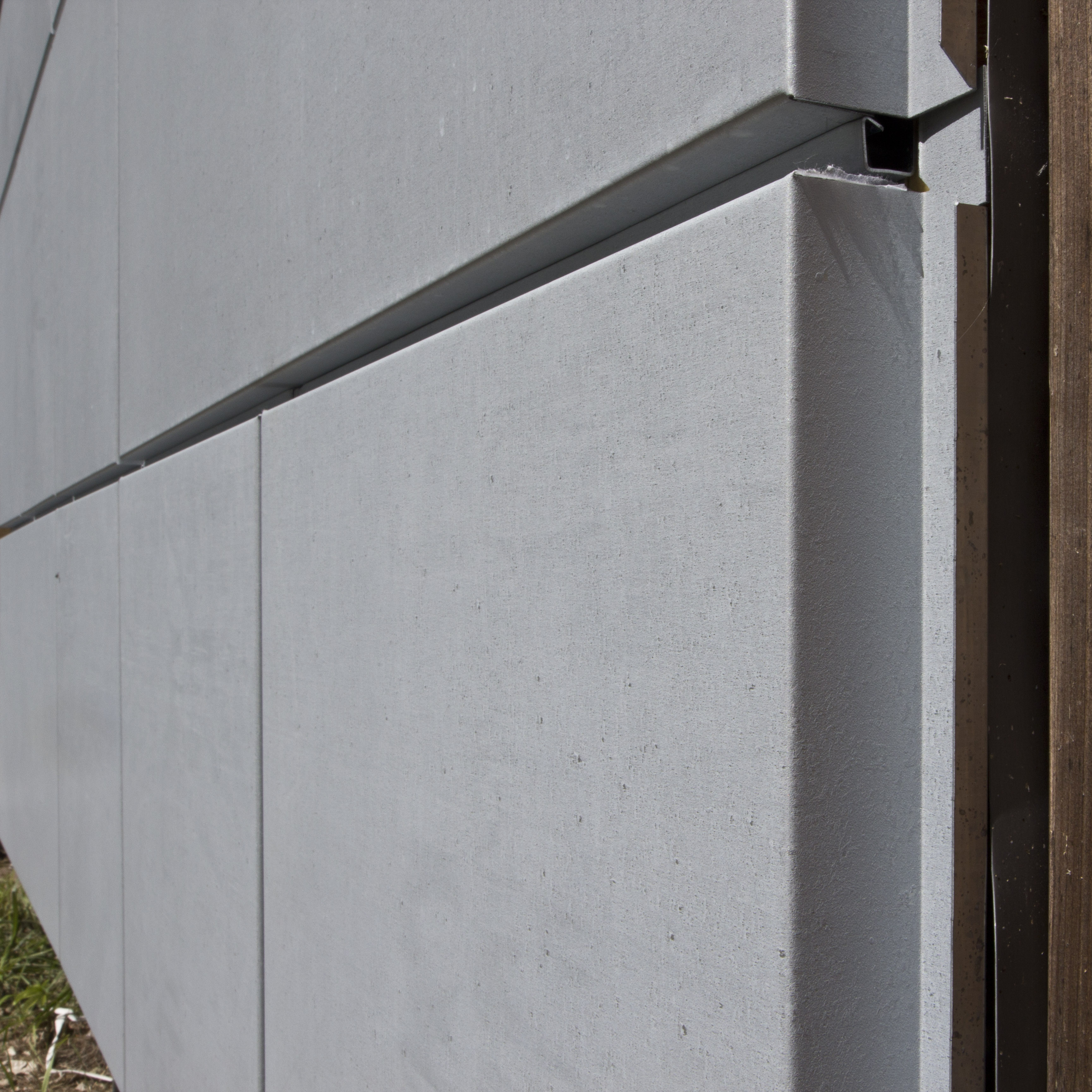 In response to feedback from over 400 international architects, VMZINC has once again pioneered a new development with AZENGAR®, the first rolled zinc facade and roofing material to be engraved. Its subtle yet distinctive surface has a matt appearance which is unaffected by fingerprints and therefore ideal for both exterior and interior use. AZENGAR is pigment-free and manufactured in 0.7mm, 0.8mm and 1.0mm thicknesses using an entirely new process. It is the lightest shade of zinc available and unlike uniform, pre-weathered shades such as QUARTZ-ZINC® and PIGMENTO, its engraving causes delicate variations in light refraction.
View VM Zinc's profile:

Clamp-on with Micronics for major installation savings, minimal downtime and dry servicing.
Story
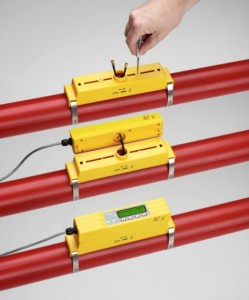 The U3000 & U1000 latest generation of clamp-on, ultrasonic flow meters from Micronics are a viable alternative to in-line meters for HVAC metering, in both retrofit and new build applications, delivering major installation savings, minimal downtime, maximised availability and significant maintenance benefits.
Liquid flow metering including LTHW, Chilled water and DHWS plus flow measurement for Thermal Energy measurement are all areas where clamp-on meters offer a best value solution for Building Services or Energy Management i.e. they will be significantly cheaper to install than traditional in-line meters and as they’re non-invasive they deliver maximum availability through dry servicing and minimal maintenance.
The larger the pipe size the greater the installed saving will be but with the elimination of flanges and by-pass valves significant savings are available for a wide range of pipe sizes with major savings for larger applications! The following is a comparison of new build installation costs the comparable savings for retrofit would be higher:
| Pipe Size mm – Steel Pipe | 25 | 40 | 50 | 65 | 80 | 125 | 150 |
| Total cost of installing insertion meters with maintenance bypass | £468 | £601 | £704 | £1,681 | £1,992 | £3,873 | £4,840 |
| Cost of installing clamp on ultrasonic meter, half hour labour up to 50mm, 1 hour labour from 50mm | £6.20 | £6.20 | £6.20 | £12.40 | £12.40 | £12.40 | £12.40 |
| Additional cost of insertion meter installation i.e. POTENTIAL SAVINGS – wiring assumed to be equal: | £462 | £595 | £697 | £1,669 | £1,980 | £3,860 | £4,828 |
| Insulation of clamp on and insertion meters assumed to be similar |
| Costs from Spons M&E It’s appreciated that competitive tendering would reduce these cost estimates. |
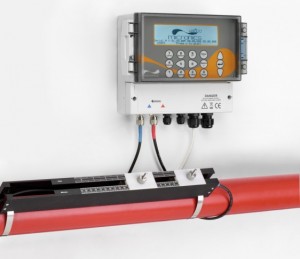 The above demonstrates the potential installation price savings from using a clamp-on solution, which would deliver an installed clamp-on meter price with savings ranging from significant to major from 50mm upwards. And with the added benefits of being non-invasive, requiring only dry servicing and maximising availability. Call+44 (0) 1628 810456 or visit www.micronicsflowmeters.com for further info.
View Micronics's profile:

CONDENSING BIOMASS BOILERS – A REAL ALTERNATIVE TO GAS OR OIL
Story


As the requirement for cleaner heating solutions gathers pace, condensing biomass boilers – boilers that burn wood pellets made from recycled sawdust or virgin timber from managed sources – are increasingly being seen as sensible options for people looking to reduce their carbon footprint.
One of the leading manufacturers of wood pellet boilers is Grant UK, a company that has been designing and manufacturing reliable, high quality, easy to install heating products for more than 35 years. Perhaps best known for their award winning oil fired condensing boilers, Grant UK has expanded its business very successfully into the new world of renewable heating technologies, offering the most efficient air source heat pumps, a sector leading eco efficient solar thermal system as well as the Spira Wood Pellet boilers – all in a range of sizes that would complement virtually any UK residence.
Grant has welcomed The Department of Energy and Climate Change (DECC) decision to include the Grant Spira range of Condensing Wood Pellet Boilers in the Domestic Renewable Heat Incentive Scheme (RHI). The MCS approved Grant Spira Condensing Wood Pellet boilers are available in outputs of 6kW up to 72kW and deliver efficiencies up to 97.4% which is impressive by any standard. Models are available for domestic properties or small scale commercial installations, the latter achieved by using two boilers mounted side by side. The solution is very efficient as the precise electronic burner control allows both units to modulate as one, down to just 25% of maximum load when the full output is not required.
With most pellet burning boilers, up to 20% of the energy that is produced is lost to atmosphere via the flue system. The Spira range features a unique secondary condensing heat exchanger designed to capture some of this lost latent heat energy, conveying additional warmth for the home. It’s just one example of the intelligent, value added design features you can expect from Grant UK products.
The Grant Spira Wood Pellet boiler requires very little maintenance in comparison with other wood pellet appliances. It has a self-cleaning system for the primary and secondary heat exchangers ensuring the system is debris free. The self-cleaning burner uses a premium EN Plus A1 standard pellet with low ash content, requiring minimal maintenance.
Wood pellet boilers are generally larger than traditional oil or gas boilers and will require a hopper to store the fuel, sited adjacent to the boiler. The Grant Spira is designed to be located in a garage, store or outhouse building, so it’s important to consider its position prior to installation. In addition, ventilation is a crucial factor for the appliance and the flue in order that its operation is safe and efficient. The boiler has an automated cleaning cycle which does result temporarily in an increase in noise levels, so that too should be considered when selecting a location for the boiler.
The Pellet storage is available in capacities from 3 to 6 tonnes. Pellets can be auger fed from storage hoppers into the intermediate pellet store supplied as standard with the boiler. Alternatively, for installations where an auger fed hopper is unsuitable, there is the Grant SpiraVac unit which swiftly and conveniently moves the pellets from the Grant external store to the internal Spira boiler hopper via vacuum hose. The system enables the bulk pellet store to be positioned up to a distance of 20 metres from the boiler.
Managing Director of Grant UK, Paul Wakefield says: “Our training team are seeing a huge increase in demand for knowledge in this arena and courses are at capacity.” Full details of the Grant UK Spira Wood Pellet boiler range and accessories can be found at www.grantuk.com.
View Grant UK's profile:

Precision Technology Supplies Ltd. Launch New Corporate Brochure
Story

As part of our continued growth we have developed a new corporate brochure showing an overview of the wide range of products and services we can offer. Previous handbooks have been very range specific and have served a purpose. However they tend to promote only those product ranges. The new brochure is designed to give a view of the complete range.
For full details of our product range please visit us at www.pts-uk.com
View Precision Technology Supplies's profile:

New Extended storage facility opens at Precision Technology Supplies Ltd.
Story

In response to increased demand for our products we have extended our storage facility in East Grinstead.
The new extension is designed for pallet storage to increase our depth of stock. This should ensure we hold greater stocks of all our major product lines to enable same day despatch from stock. Along with the storage extension we have added a mezzanine floor to increase office space and storage within the existing units.
For full details of our product range please visit us at www.pts-uk.com
View Precision Technology Supplies's profile:
CARBON EMISSIONS REDUCED CONSIDERABLY THROUGH HOLWELL FOUNDRY INVESTMENT
Story

Iron technology leader Saint-Gobain PAM UK, part of leading international materials company, Saint-Gobain, has further demonstrated its environmental commitment through several major investments at Holwell, near Melton Mowbray, including one which has seen CO2 emissions from its cupola furnace – the biggest of its kind in the UK – fall dramatically.
The previous installation of a dry bag filter system has meant particulate emissions have been reduced by 99 per cent from the cupola furnace. As a result, emissions are now less than 0.3kg per tonne of castings, while the company has reduced site water use by 63 per cent and electricity by 9 per cent, and completely eliminated the use of caustic soda previously employed for cleaning the wet filtration system. The move also brings a reduced risk to permitted drainage discharge points.
A second substantial investment has been the installation of a heat exchanger to recover waste heat from combustion gases. The energy regained by the heat exchanger will be used to re-heat input air to the furnace, resulting in an annual saving of 2,200 tonnes of CO2. A new control system has also been established at Holwell, which will facilitate both the cupola furnace’s filter system and the new heat exchanger.
Paul Minchin, Managing Director of Saint-Gobain PAM UK, added: “It is important to us that we continue to invest in measures that will put environmental savings at the forefront of business. The investment in the cupola furnace’s new filtration and heat recovery system has reduced CO2 emissions enormously, and is just one example of our business ethos, which has minimising our environmental impact at its heart. These measures will pave the way for further developments in optimising energy use, reducing gas consumption, use of low level waste heat and the recycling of collected particulates.
“The investment also shows our commitment to maintaining a UK manufacturing base, with our site near Melton Mowbray providing a truly local service to UK customers, removing the supply chain delays which can occur with imported products.”
For further information visit www.saint-gobain-pam.co.uk/access-press.
Pictured in front of the cupola: project team members (left to right) Richard Brown, John Mcleod, Tim Benton
View PAM Building's profile:

‘Always in control, regardless of location’
Story

This is the slogan with which Daikin Europe announces the launch of its new online controller. Available for use with a wide range of Daikin split units, the new solution enables a heat pump system to be controlled, irrespective of its location via a laptop, tablet or smart phone with access to the internet or via wired remote control.
It is easy to forget to turn off a heat pump system before leaving the premises or because of a delay in returning, to be faced with needlessly re-warming or cooling them. In the past these avoidable problems would have resulted in wasted energy but this need no longer be the case. The new Daikin online controller provides round the clock control via a laptop, tablet or even smart phone to access the heat pump system via the internet. Fault conditions can also be detected remotely, allowing a quick response to problems.
Control of the heat pump system is possible from anywhere with internet access achieved simply by entering the URL or running the app on a supported device to gain access to the system’s main functions. Whether the operator is a residential user or the manager of a chain of shops requiring control of groups of units, the Daikin online controller ensures the peace of associated with having full control.
The online controller is compatible with selected Daikin split systems such as Daikin Emura and Nexura as well as other wall-mounted, floor-standing and ducted systems in the split range and is available wef January 2012.
Daikin Europe products are distributed in the UK by Daikin Airconditioning UK Ltd and Space Airconditioning plc.
View Daikin's profile:

Daikin Europe increases use of green energy with solar panels at Ostend plant
Story

Daikin Europe N.V. has added to its green energy bank by the installation of almost 2,000 solar panels at its Ostend, Belgium production plant. Designed to produce around 400,000 kW electricity per year (the equivalent consumption of 115 households), the system went on stream at the end of August and the energy generated will help power Daikin’s on-site operations.
Daikin Europe originally considered the use of solar panels some five years ago but since the efficiency of the then available technology was inadequate, purchased green electricity on the market, reducing its environmental footprint and resulting in a drastic reduction of CO2 emissions. However, solar panel efficiency has improved considerably and the decision to install panels was examined again and approved in 2010. Work began at the end of April and the system became operational at the end of August.
The deployment of solar panels is very much in line with the overall environmental policy of the company and its intention to decrease dependence on electricity suppliers and the choice of solar panels was taken after considering other solutions including wind turbines. The installation will result in a yearly savings of up to 160 tonnes of CO2. System capacity of 400,000 kW per year was dictated by limitations in the region’s electricity grid due to the high number of renewable systems already in place.
The solar panels are located on certain plant roofs at Ostend site and to highlight the effort and increase environmental awareness the performance of the installation will be visible via screens in the factory and reception area. Real time data will include daily energy production, CO2 saved and comparisons with previous periods. Minimum life of the installation is 20 years but actual life is expected to be 30-40 years.
Daikin Europe N.V. announces the expansion of its Daikin Altherma heat pump range to cover large-scale commercial applications in which space heating and hot water production are a priority. Due to the use of Daikin Altherma cascade technology, large volumes of hot water (with temperatures up to 80°C) can be produced efficiently, making the system ideal for applications with a high demand for space heating and/or hot water heating.
Large capacity hot water production for the commercial market
The optimised Daikin Altherma Flex Type series produces leaving water temperatures from 25° to 80°C, making it suitable for all types of radiators, under floor heating, fan coil units, heat pump convectors as well as hot water production. Typical applications include hotels, fitness centres, spa facilities, hospitals, libraries and schools. The high leaving water temperatures also make it ideal for upgrading existing heating systems, allowing retention of existing high temperature radiators.
The use of Daikin Altherma cascade technology: two refrigerants – R-410A and R-134a – in a cascade configuration, enables the system’s high leaving water temperatures to be produced without an electric heater. The outdoor unit elevates the temperature and pressure level of the first refrigerant cycle (R-410A) and the indoor units raise this to even higher levels with the second refrigerant cycle (R-134a), resulting in water temperatures up to 80°C using only heat pump technology.
Hot water temperatures up to 75°C result in highly efficient hot water production with rapid heat-up times and the system can be connected to Daikin hot water tanks as well as to (existing) 3rd party tanks. Daikin solar heating can also be integrated for even greater efficiency.
Low running costs
Daikin Altherma cascade technology, in combination with inverter controlled compressors and weather dependant temperature control, results in extremely efficient operation. Running costs can be up to 36% less than comparable oil or gas installations, with up to 35% less primary energy use and up to 71% less CO2 emissions.
Furthermore, optimal dimensioning further enhances efficiency, the system’s modular construction and several different capacity classes of indoor and outdoor units allowing precise configuration for specific needs. The indoor and outdoor units are compact and lightweight, for quick, flexible installation.
The Daikin Altherma Flex Type units extend the existing Daikin Altherma range of low temperature and high temperature systems intended for individual houses and apartment blocks.
Daikin Europe products are distributed in the UK by Daikin Airconditioning UK Ltd and Space Airconditioning plc.
View Daikin's profile:
New BBA Rig Tests for CE Marking
Story

The BBA has just taken delivery of a new rig which tests the hygrothermal performance of solid wall insulation systems called external thermal insulation composite systems (ETICS) to the European Technical Approval Guideline (ETAG) 004. ETICS are external wall insulation systems (EWIS) comprising insulation coated with render. The new rig is extremely versatile and can meet the requirements of a number of different test specifications.
The ETAG 004 test regime involves subjecting an insulated solid wall to a series of extreme temperature cycles. This tests how the insulation system will react over time to changes in moisture (humidity) and temperature. The tests and assessment methods outlined in ETAG 004 have been written with an intended working life of 25 years in mind.
The test regime subjects the insulation system to repeated cycles of heat and rain, then heat and cold, and finally heat, rain, freeze and thaw. These cycles are completed in strict order for a set amount of time. During these series of cycles the system can be exposed to temperatures as high as 70°C and as low as -15°C mimicking the extreme weather conditions the insulation system could face during its expected working life. Once complete the test wall is assessed for damage such as surface blisters, flaking, delamination, cracks and other visible changes.
Although mainly aimed at ETICS, other materials such as cement particle boards, glass reinforced plastic (GRP) and MgO boards can also be tested.
The new rig is a significant investment by the BBA and it has been made to address the growth of interest in hygrothermal testing of external wall insulation systems due, in part, to the ability to CE mark this type of insulation system. Although CE marking remains voluntary, for products that do not fall within the scope of a harmonized European Standard (hEN), a manufacturer can obtain CE marking through assessment against the appropriate European Technical Assessment (ETA) and a system of assessment and verification of constancy of performance procedure.
The ETAG 004 hygrothermal test is significantly shorter than other similar tests and coupled with the improved efficiency and versatility of the new rig, cycle times are significantly reduced compared to the test rigs previously used by the BBA. This means a quicker throughput of work increasing the capacity to cope with the anticipated higher level of demand. However, companies are advised to contact the BBA as soon as possible to ensure their products can be scheduled for testing in plenty of time.
To contact the BBA e-mail testing@bba.star.co.uk or telephone 01923 665300.
View BBA's profile:

WHAT’S UP, DOCK? EASILIFT’S ADVANCED CONTROL CENTRE PROVIDES ALL THE ANSWERS AT A GLANCE
Story


Easilift Loading Systems has launched the Advanced Control Centre, an intuitive management system that helps distribution centres and warehouses to efficiently and pro-actively take care of loading bays and vehicle traffic.
The system comprises four easily accessible web-based modules – Service; Dock Management; Facility Management; and Statistics & Reporting – providing a comprehensive overview of loading bay activity.
Benefits of the system include faster maintenance, more effective servicing, reduced waiting times, and improved safety, security and energy savings.
“The modern technology of the Advanced Control Centre integrates a whole host of useful functions into a complete operational solution,” explains Rob Fay, managing director of Easilift. “With unprecedented control over loading bay processes, warehouse co-ordinators can optimise efficiency for maximum uptime.”
The Service module supports everyday operation with 24/7 monitoring of maintenance requirements. An Easilift specialist is automatically notified upon any equipment breakdown, so that problems can be immediately analysed and solved – sometimes before the problem is detected on-site. Where possible, this is achieved remotely, significantly reducing disruption as well as avoiding service engineer call-out charges.
By delivering an ongoing audit of loading bay activity, the Advanced Control Centre can also measure usage to ensure that periodic maintenance is appropriate to the specific bay. Automatic planning arranges routine maintenance at the correct service intervals to extend product lifetime.
Dock Management offers real-time information on the status of all loading and unloading dock stations to enable the swift and appropriate allocation of vehicles. With remote reservations ahead of arrival and automatic re-allocation upon vehicle departure, bottlenecks are minimised and dock usage maintained.
Facility Management complements these capabilities with an ‘at a glance’ inventory of essential station data. With expensive utilities energy lost every time a door is opened unnecessarily, or internal lighting systems left on, warehouse co-ordinators can restrict usage only to active bays. And with security paramount, the system can augment or replace existing walk-around surveillance.
The final module, Statistics & Reporting, gives the customer up-to-date information on everything from loading bay station usage rates to average loading and unloading times. As well as substantiated analysis to optimise the flow of traffic and goods, it delivers an overview of operational costs.
“Effective business management means knowing what is happening in the workplace, in order to reduce wastage and focus on the essentials. With our Advanced Control Centre, distribution centres and warehouses now have an authoritative tool to co-ordinate all loading bay activity,” confirms Rob Fay.